Stress doesn’t just affect behaviour; it can have a real impact on your pet’s gut health. In dogs and cats, chronic stress can lead to increased intestinal permeability, commonly called “leaky gut.” When the gut barrier is compromised, bacteria and toxins can enter the bloodstream, triggering inflammation, immune responses, and even behavioural changes.
How Stress Makes the Gut Leaky
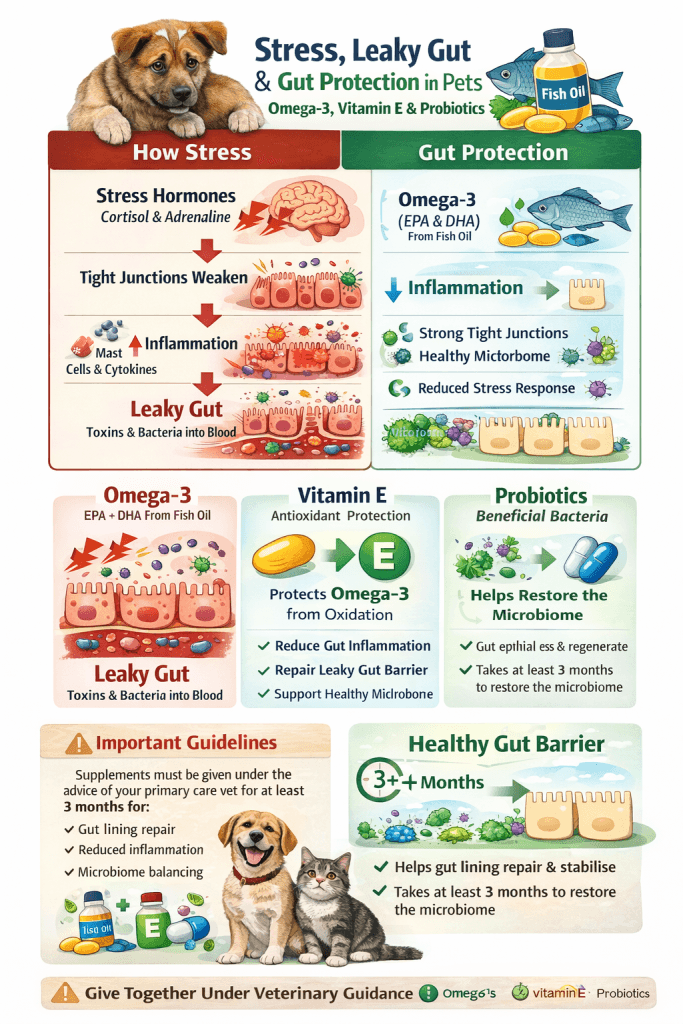
The gut lining is normally sealed by tight junctions between epithelial cells, which act like gates, letting nutrients in while keeping harmful substances out. Stress can disrupt this barrier in several ways:
- Stress hormones: Cortisol and adrenaline weaken tight junctions.
- Inflammation: Stress activates mast cells and cytokines, increasing local gut inflammation.
- Microbiome imbalance: Beneficial bacteria decrease, and harmful species can proliferate, further damaging the gut lining.
- Reduced mucus and blood flow: Stress decreases the protective mucus layer and slows epithelial repair.
The result is a gut that leaks toxins, contributing to chronic inflammation, gastrointestinal issues, and behavioural problems.
How Omega-3 Fatty Acids Help
Omega-3 fatty acids, particularly EPA and DHA from fish oil, are powerful tools for gut protection:
- Reduce inflammation: Shift the body’s response toward anti-inflammatory mediators.
- Strengthen tight junctions: Repair and stabilise the epithelial barrier.
- Support the microbiome: Promote beneficial bacteria and increase short-chain fatty acid production.
- Modulate the stress response: Reduce HPA axis overactivation, indirectly protecting the gut.
Why Vitamin E Should Be Included
Omega-3s are polyunsaturated fats and prone to oxidation, which can reduce their effectiveness or even trigger inflammation. Vitamin E, a fat-soluble antioxidant, protects omega-3s from oxidative damage, ensuring they remain beneficial for gut health.
The Role of Probiotics
Probiotics are live beneficial bacteria that can help restore the gut microbiome after stress or inflammation. They:
- Compete with harmful bacteria
- Enhance short-chain fatty acid production
- Support tight junction integrity
- Reduce gut inflammation
When used alongside omega-3 and vitamin E, probiotics provide a synergistic effect, helping repair and maintain a strong gut barrier.
Veterinary Guidance and Duration
It’s important that all supplementation—omega-3, vitamin E, and probiotics—be given under the guidance of your primary care veterinarian. Dosages, formulations, and combinations need to be tailored to your pet’s individual health status.
For meaningful gut repair, these supplements usually need to be administered for a minimum of three months. This allows enough time for:
- Gut epithelial cells to regenerate
- Tight junctions to stabilise
- The microbiome to rebalance
- Inflammatory processes to settle
Stopping early may reduce effectiveness, as gut repair is a gradual process.
Practical Takeaways
- Stress can compromise gut health in dogs and cats.
- Omega-3 fatty acids reduce inflammation and repair the gut lining.
- Vitamin E protects omega-3s from oxidation.
- Probiotics restore and support a healthy microbiome.
- All supplements should be given under veterinary guidance and continued for at least three months for optimal results.
Together, omega-3, vitamin E, and probiotics can help your pet maintain a healthy, strong gut, even in stressful situations.